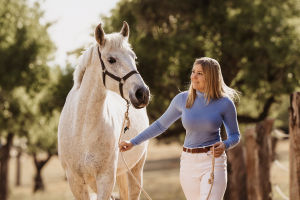
When we think about equestrian practice, we often imagine riding on horseback right away. But in real training, what happens on the ground is just as important. One of the most basic yet essential skills is leading a horse forward.
Before anything else, we and the horse need to build a calm and clear rhythm together. Leading is not only about moving forward; it is about communication, timing, and trust. When we walk beside the horse correctly, the entire movement becomes smoother and safer for both the horse and the handler.
Correct Position and Body Alignment
When we lead a horse, our position matters a lot. We should stay on the left side of the horse, roughly between the head and shoulder area. This placement helps us guide direction while keeping enough space to stay safe.
We hold the lead rope or rein with the right hand, keeping a short but comfortable distance, around twenty centimeters from the connection point. The extra length of the rope is gathered gently in the left hand, so it does not drag or get tangled.
While walking, we stay close enough to communicate clearly, but not so close that movement becomes restricted. The goal is steady coordination, not pressure.
How We Guide Forward Movement
Sometimes the horse may hesitate or stop. In such moments, instead of pulling strongly, we use light guidance. A gentle outward movement of the horse’s head can help encourage the first step forward.
We may also give soft rope signals or rhythmic motion to suggest direction. If we want the horse to go left or right, we also move in that direction ourselves. Our body language and steps should match the path we expect the horse to follow.
Consistency is key. When we move with purpose, the horse understands more clearly what is being asked.
What We Should Avoid During Leading
There are a few common mistakes that can interrupt communication:
- We should not stand too far from the horse, because it weakens guidance and may cause confusion.
- We should also avoid staying too far behind the shoulder area, since the horse may lose direction cues.
- Continuous pulling on the rope can create discomfort and uncertainty, making the horse less responsive.
- At the same time, we should not allow the horse to step too close and take over our personal space. This can reduce control and increase safety risks.
- Finally, we should never let the horse move ahead of us without guidance, as this breaks the shared rhythm of walking together.
Transitioning into a Faster Walk
Once the horse is comfortable at a slow walk, we can guide it into a quicker pace. This transition should feel natural, not sudden.
We can use a clearer voice cue combined with a light hand signal. At the same time, our own walking speed increases or shifts into a light jog so the horse can understand the change in rhythm.
When the horse begins to move faster, we maintain a steady connection through the rope, guiding forward direction without excessive force. Our pace should always match or slightly lead the horse so we stay in control of the movement.
Maintaining Rhythm and Control
During the faster walk, our focus is consistency. Once the horse is moving well, we reduce unnecessary hand motion and keep only a simple, steady connection.
We observe the horse's rhythm and breathing while staying aware of our surroundings. The aim is to maintain flow rather than correction.
If we need to slow down, we reduce our own speed first. Then we give a calm signal. If the horse does not respond immediately, a gentle tightening of the rope can be used, followed by a clear directional cue.
When the horse returns to a slower walk, we release pressure and return to a light, relaxed connection.
Ending the Session with Calm Control
As the exercise finishes, we gradually bring the horse back to a relaxed walking pace. Our movements become softer, and communication becomes minimal but clear.
The horse should feel settled, not rushed or confused. We finish the session by keeping a simple, light connection through the rope, reinforcing calm behavior and trust.
Final Thoughts
Leading a horse is more than a basic handling skill; it is a foundation for effective communication and safe interaction. By maintaining proper position, using clear body language, and applying consistent guidance, handlers can build trust and improve responsiveness. Strong groundwork habits create a safer and more positive experience for both the horse and the handler, supporting future training and everyday management.
Lykkers, every walk with a horse is an opportunity to strengthen understanding and cooperation. By focusing on consistency, patience, and clear communication, we can develop a calm and confident partnership built on trust. Over time, these simple groundwork practices can strengthen the connection between horse and handler, creating a more rewarding experience for both.