The forehand swing is the foundation of badminton and often the most misunderstood shot.
Many beginners think hitting harder comes from arm strength, but true power comes from a complete, well-timed swing rather than tension in your muscles.
Learning to generate momentum through proper technique is the key to hitting harder and more accurately.
Body Position Before the Swing
Start with the forehand grip and move into an attacking stance — body turned sideways, not square to the net. Your non-racket foot should be forward. This side-on position is the foundation for a controlled and powerful swing. From there, draw your racket arm back behind your shoulder as early as possible. Early preparation is one of the habits that separates players who feel rushed from players who appear calm and composed.
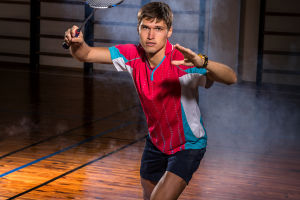
As your racket arm goes back, your non-racket arm lifts up simultaneously. This isn’t decorative — it acts as a counterbalance, keeping your posture steady throughout the swing.
The Swing and Follow-Through
Your swing should be one smooth downward arc, not a choppy push. Extend your chest as you swing — the wider the chest extension, the fuller the swing, and the more power you access. Make contact with the shuttle as high above your head as possible. Timing that contact point correctly separates a clean hit from a mishit.
Then let the racket follow through naturally after contact. Stopping the swing at the moment of impact reduces power and affects the shuttle’s trajectory. Allow the racket to carry through the motion to its natural end.
The Non-Racket Arm Is Not Optional
Beginners often forget the non-racket arm once the rally starts. This is a mistake. The arm needs to stay active throughout the swing — lifting during preparation, helping balance during the swing, and returning naturally during the follow-through. Without that balance, the body tends to rotate out of alignment, and swing quality drops.
If something feels off in your forehand and you cannot figure it out, check your non-racket arm first — it is usually the culprit. The forehand swing should feel comfortable throughout. If it doesn’t, go back through the steps slowly — rushing builds incorrect habits that are difficult to break.
Mastering the forehand swing in badminton is less about arm strength and more about mastering technique. Proper body positioning, a complete swing, and coordinated use of the non-racket arm unlock maximum power and control. Practicing these steps methodically ensures consistent, high-quality shots and helps build lasting skills.