Fertilizer is one of those houseplant topics that sounds more technical than it is.
Walk into a garden center and you're suddenly facing rows of bottles, bags, and spikes with confusing numbers on the label, and it's easy to just grab something and hope for the best — or skip fertilizing entirely.
The truth is, once you understand a few basics, it becomes pretty intuitive. And getting it right makes a visible difference in how your plants look and grow.
Understanding the Numbers on the Label
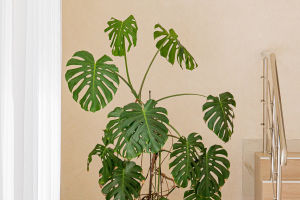
Every fertilizer label shows three numbers, like 10-10-10 or 5-3-8. These represent nitrogen (N), phosphorus (P), and potassium (K)—the three primary nutrients plants need in the largest quantities. Nitrogen promotes leafy, green growth, so foliage-heavy plants like monstera, pothos, and philodendron do well with a fertilizer that has a higher first number. Phosphorus supports root development and flowering, so if you’re growing peace lilies, orchids, or African violets, a formula with a higher middle number is ideal. Potassium helps with overall resilience against pests and stress. For most common houseplants, a balanced fertilizer—equal or near-equal numbers like 10-10-10 or 20-20-20—covers all the bases without overcomplicating things.
When to Fertilize (and When to Stop)
Plants use fertilizer only when they're actively growing, which for most houseplants is spring through early summer. That's when longer days and more light trigger new growth, and that's when regular feeding makes the most impact. A general guideline is every two to three weeks during this active period for most tropical houseplants. As late summer transitions into fall and the light levels drop, start tapering off — feed less frequently and at a lower concentration. Stop altogether in winter, when most indoor plants are in a slower, semi-dormant phase. Feeding a plant that's barely growing just causes fertilizer salts to build up in the soil with nowhere to go, which burns roots. Plants in low light also need much less fertilizer than those in bright conditions — twice or three times a season is plenty for those.
Liquid vs. Slow-Release — What's the Difference
Liquid fertilizers, either ready-to-use or concentrated and diluted in water, are the most flexible option. They absorb quickly and let you control exactly how much you're applying each time. The tradeoff is that they need to be reapplied every few weeks during the growing season. Slow-release granules or spikes are a more set-it-and-forget-it approach — you mix them into the soil or press them in, and they gradually break down over weeks or months with each watering. These are great for people who know they'll forget a liquid schedule. Organic options like fish emulsion or seaweed extract work more gently and have the added benefit of improving soil health over time. Whatever type you use, always apply to moist soil — never fertilize a bone-dry container, as this concentrates nutrients directly on dry roots and causes burning.
The Most Common Mistake: Too Much, Too Often
Over-fertilizing is far more common than under-fertilizing, and it's more damaging. Signs that a plant has had too much include brown, crispy leaf edges, a white crusty layer forming on the soil surface or container rim (that's salt buildup), wilting despite adequate water, and stunted new growth. If this happens, flush the soil thoroughly with plain water several times to rinse out the excess. In more severe cases, repotting into fresh soil is the better solution. The safe approach with fertilizer is always to start with less than the label suggests — around half the recommended dose is a sensible starting point — and increase only if the plant responds well without showing any stress.
Don't Forget Micronutrients
The N-P-K trio gets all the attention, but plants also need smaller amounts of trace elements like iron, manganese, boron, and zinc. These micronutrients are often absent from standard potting mixes, especially in plants that have been in the same soil for a year or more. Most quality houseplant fertilizers include them, but it's worth checking the label. Earthworm castings are a gentle, natural way to supplement micronutrients alongside regular fertilizing — mixing a small amount into the top layer of soil provides a slow, steady feed of trace minerals that most liquid fertilizers don't fully cover.