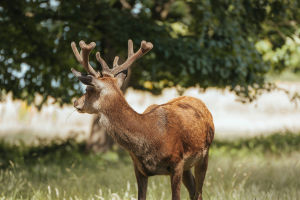
Today, we explore the mule deer, a fascinating wild animal that moves quietly across mountains, grasslands, and forest edges. It is known for its large ears, flexible survival skills, and ability to live in many different environments.
As we learn about it together, we will see how this animal survives seasonal changes, what it eats, and how it raises its young in the wild. Let’s take a closer look in a simple and easy way.
A Unique Appearance That Stands Out in Nature
The mule deer is easy to recognize because of its long ears, which resemble those of a mule. This feature also helps it hear better in open landscapes.
It is a medium-to-large deer, standing about 90 to 105 cm tall at the shoulder. Its weight can vary widely depending on age and environment. Males are generally larger and grow antlers each year, while females do not.
Its coat changes with the seasons. In warmer months, the fur appears reddish-brown, blending well with dry grasses and rocky terrain. In colder months, the coat turns grayish-brown, helping it stay less visible in forested or snowy environments. A white patch on the rear and a two-tone tail pattern make it easy to identify when it moves.
Daily Life and Natural Rhythm
Mule deer do not always live in large mixed groups. Males and females often form separate groups for most of the year. They only come together during the breeding season.
We often find them near areas with steady water sources and rich plant life. These places provide both food and safety.
Their activity follows a clear rhythm. Early morning and evening are the most active times. During the middle of the day, they rest in quiet and hidden places, avoiding heat and staying alert to their surroundings.
Seasonal Movement for Survival
One of the most impressive traits of mule deer is their ability to move with the seasons.
In warmer months, they live in higher mountain grasslands, sometimes at great elevation. These areas offer fresh vegetation and cooler temperatures.
When colder seasons arrive, they move down into lower valleys and forest areas. This movement is not random. It is a survival strategy that helps them find food and shelter when conditions change.
We can see how nature shapes behavior, guiding them to follow resources throughout the year.
Mule deer demonstrate a sophisticated biological rhythm known as crepuscular activity, meaning they are most active during the twilight hours of dawn and dusk to maximize foraging efficiency while minimizing predator exposure.
Their seasonal migration is equally rhythmic and follows a "green wave" pattern; they track the emergence of high-protein forage up mountain slopes as snow melts in the spring, often returning to the exact same wintering grounds each year via ancestral migratory corridors.
These paths can span over 150 miles, representing one of the longest land migrations in the lower 48 United States. By synchronizing their movements with the phenology of local plants, they ensure access to the nutrient-dense vegetation required to sustain their large body mass through harsh winter months.
A Flexible and Wide-Ranging Diet
Mule deer are herbivores with a very diverse diet. They feed on grasses, leaves, buds, fruits, seeds, bark, small branches, fungi, and lichens.
Because their digestion is not highly efficient, they must eat frequently and in large amounts. Their survival depends on continuous feeding.
In the autumn period, they increase their food intake to store energy for colder months. This preparation helps them stay strong when food becomes harder to find.
Reproduction and Early Life Journey
The breeding season usually happens in cooler months of the year. During this time, males compete for the attention of females.
After mating, the gestation period lasts around 6 to 7 months. A female gives birth to 1 to 4 young at a time.
Newborn fawns are covered with white spots, which act as natural camouflage in grass and forest areas. These spots help them stay hidden from danger.
For the first few months, they depend on milk. As they grow stronger, they slowly begin to eat plants and learn survival skills from their surroundings.
Habitat Range and Role in Nature
Mule deer live across a wide range of natural environments, including grasslands, forest edges, farmland borders, and mountainous regions.
Their adaptability allows them to survive in many different habitats. This flexibility is one reason their population remains relatively stable in many areas.
However, in places where natural balance is limited, their population can grow quickly. This can influence vegetation growth, showing how important ecosystem balance is for all living things.
A Quiet Survivor of the Wild
The mule deer is more than just a wild animal. It is a symbol of adaptability, patience, and natural balance. From seasonal movement to flexible feeding habits, it shows us how life adjusts to changing environments in smart ways.
As we observe its lifestyle, we gain a deeper understanding of how nature works as a connected system.
What do you think about this quiet yet powerful survivor of the wild? Share your thoughts, Lykkers, and let’s continue exploring the wonders of nature together.
5 Facts About Mule Deer You Need to Know! | White Tail Deer
Video by Wildlife Pedia English